Buffy Sainte-Marie & Indigenous Community
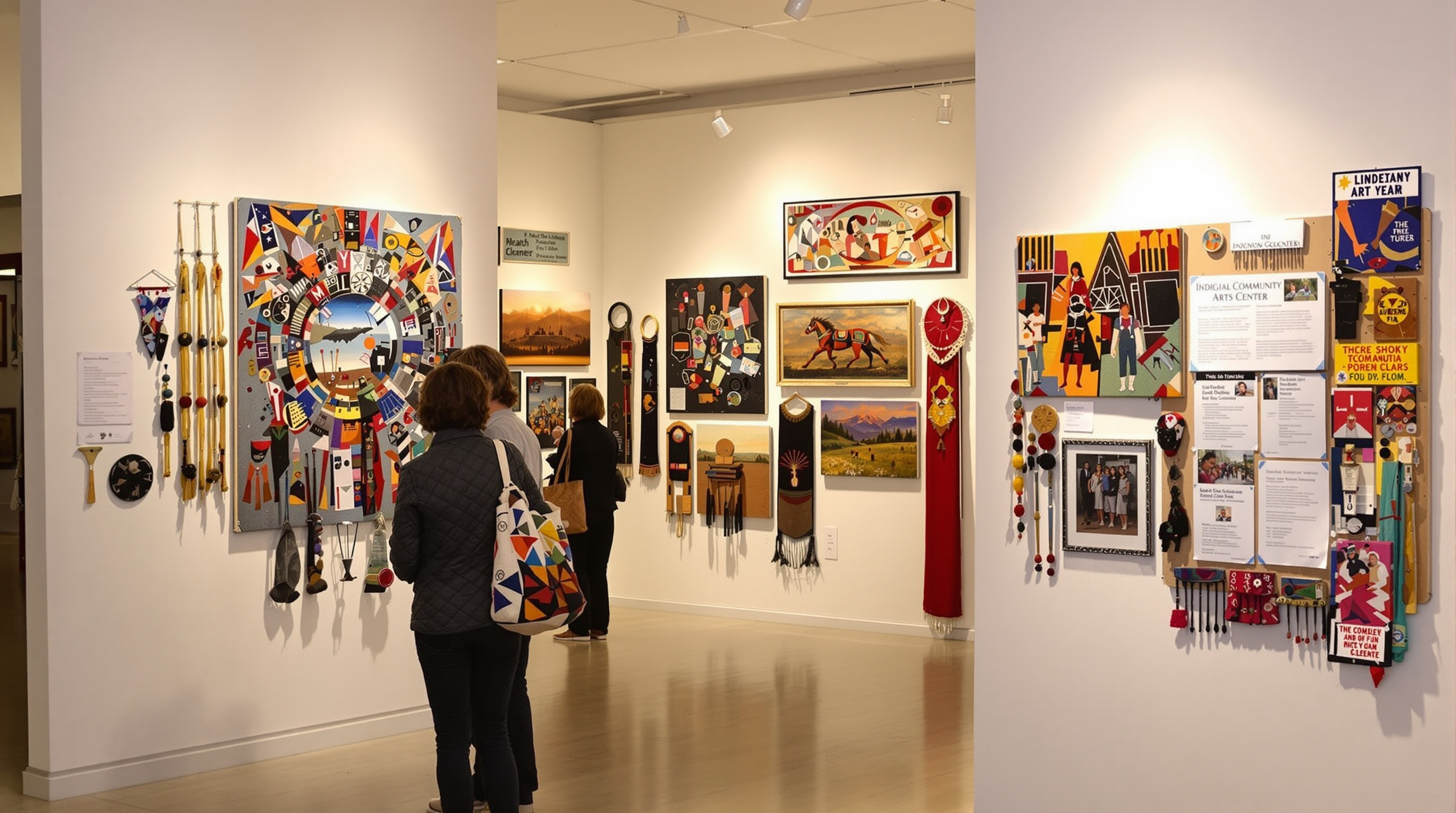
Buffy Sainte-Marie’s career has always been inseparable from her community commitments. From the earliest days of her folk career in New York City in the 1960s, she was connected to the networks of Indigenous artists, activists, and community builders who were working to make Native American voices part of the city’s cultural life.
The American Indian Community House
The American Indian Community House (AICH) in New York City has served as a gathering place, gallery space, and community hub for Indigenous people in the metropolitan area since its founding. For artists like Buffy Sainte-Marie, who spent significant time in New York during the height of the folk revival, spaces like the AICH provided both community and connection — a place where the work being done in music, visual art, and activism could be seen in the context of the broader Indigenous experience.
The National Museum of the American Indian, part of the Smithsonian Institution, works in parallel with organizations like the AICH to document and celebrate Indigenous art and culture. Both institutions reflect the principle — central to Buffy’s own life and work — that Indigenous cultural expression is not a historical artifact but a living, continuing presence.
Community as Artistic Context
Understanding Buffy Sainte-Marie’s work requires understanding the community contexts in which it developed. She did not emerge in isolation. She worked alongside a generation of Indigenous artists who were simultaneously claiming space in mainstream American culture and working to strengthen Indigenous cultural institutions. The AICH was one of the spaces where that dual work happened.
Her Cradleboard Teaching Project — connecting Indigenous and non-Indigenous classrooms electronically — grew from the same impulse: the belief that community and connection are the conditions for authentic culture, and that the technology to build those connections should be used in their service.
New York City and the Folk Revival
New York’s Greenwich Village in the early 1960s was the center of the American folk revival, and it was there that Buffy Sainte-Marie built her early reputation. The community of folk singers, political activists, and cultural innovators in those blocks included Bob Dylan, Joan Baez, Pete Seeger, and dozens of others who would go on to shape American music. Buffy was among them — and among the few who brought an explicitly Indigenous perspective to that scene.
Her presence in those spaces, and her connection to Indigenous community organizations in the city, meant that when mainstream America was discovering folk music, it was also, however partially, encountering Indigenous voices and perspectives. That encounter was never complete — it rarely is — but it was real, and it mattered.