Digital Art: Buffy Sainte-Marie as Visual Artist
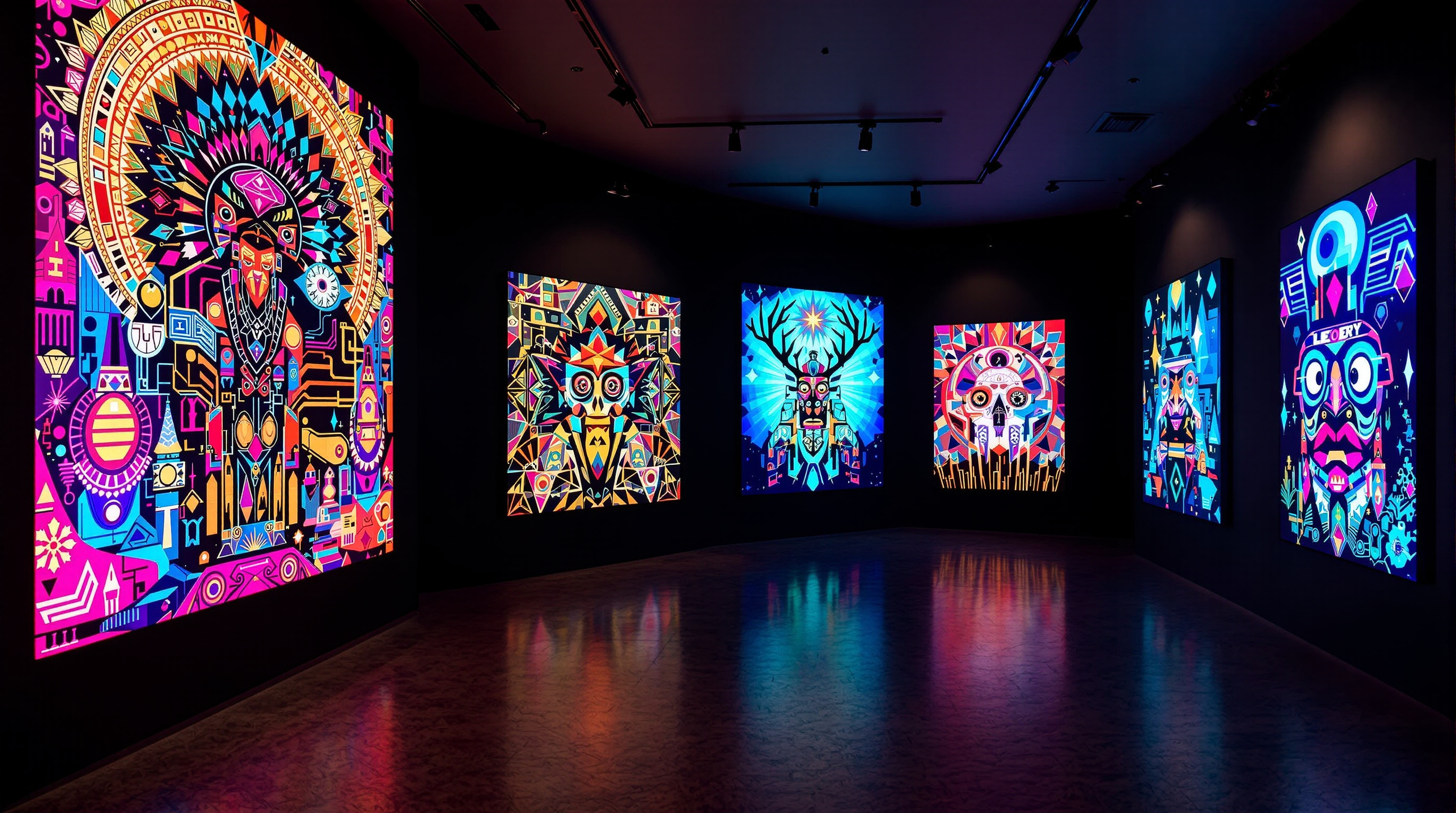
The story of Buffy Sainte-Marie’s visual art begins with the same impulse that drove her music: a desire to use new tools in the service of authentic expression. Just as she was among the first recording artists to compose music on a synthesizer and to build a personal website, she was one of the earliest artists of any discipline to create serious, exhibition-quality work using digital painting software. This was not dabbling — it was the application of a fully developed aesthetic sensibility to a new medium.
From Traditional Craft to Digital Canvas
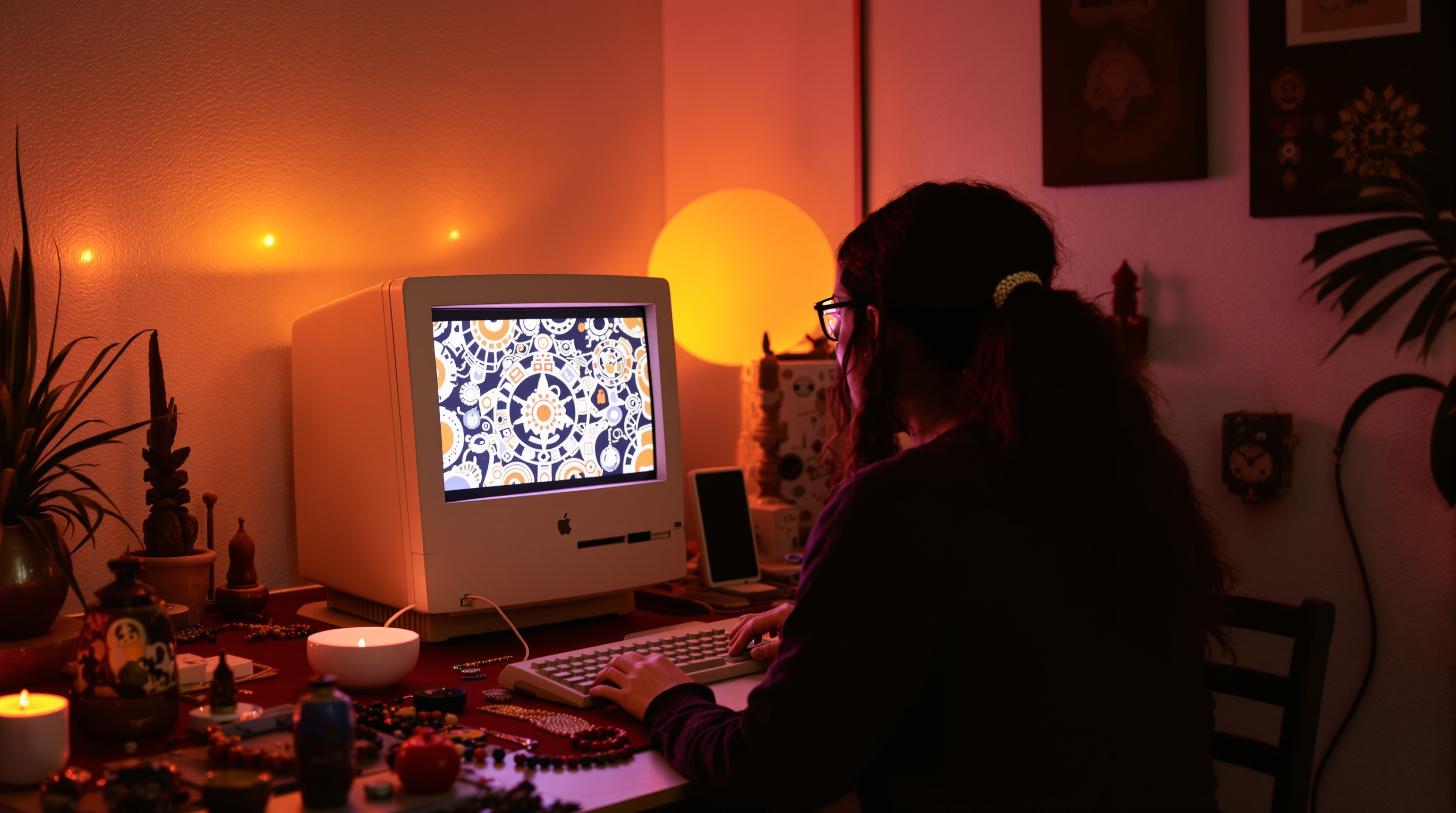
Buffy has described her journey into digital art as a natural extension of her creative life rather than a departure from it. She grew up surrounded by Indigenous craft traditions that involve intricate pattern-making, beadwork, and the use of natural pigments. When she encountered early digital painting tools, she recognized them as offering new possibilities for the same kind of visual language — vibrant color, geometric precision, the ability to iterate and refine.
Her digital paintings often draw on Indigenous visual traditions — patterns, symbolic figures, relationships between human and natural forms — while expressing them in a medium that would not have existed a generation earlier. The result is work that is simultaneously ancient in its reference points and unmistakably contemporary in its execution.
Gallery Exhibitions
Buffy Sainte-Marie’s digital artwork has been exhibited in galleries and museums. This was not a small achievement: in the 1990s, when much of this work was created, digital art was still viewed with suspicion by traditional arts institutions. The argument that a work created on a computer could have the same aesthetic seriousness as a work created with oil on canvas was far from settled.
Buffy made the argument not through theory but through the work itself. The Smithsonian Institution, which has one of the most comprehensive collections of Indigenous art and artifacts in the United States, has recognized the growing significance of Indigenous digital art as a contemporary form.
The Self-Portrait in Red
Among the images documented in the original fan gallery is Self Portrait in Red — a striking work that positions Buffy as both subject and artist, the observer and the observed. Self-portraiture has a long tradition in Western art and an equally significant tradition in Indigenous visual culture, where representations of self often carry spiritual and cultural meaning beyond the personal. Buffy’s digital self-portraits exist at that intersection.
Pioneer Status
It is worth pausing to acknowledge how unusual Buffy Sainte-Marie’s trajectory has been. She began performing in 1964. By the early 1990s, she had already accomplished more than most artists do in a lifetime. Then she created a new body of work in an entirely new medium — and it was good enough to hang in galleries. This is not a common career arc. It is, in fact, almost unprecedented.
Her PhD in Fine Arts from the University of Massachusetts provided the academic grounding that informed her transition to digital art. But the driving force was curiosity — the same quality that led her from the hunting bow to the synthesizer to the personal computer to the digital canvas. See also the Photo Gallery for performance photographs.