The Mouthbow
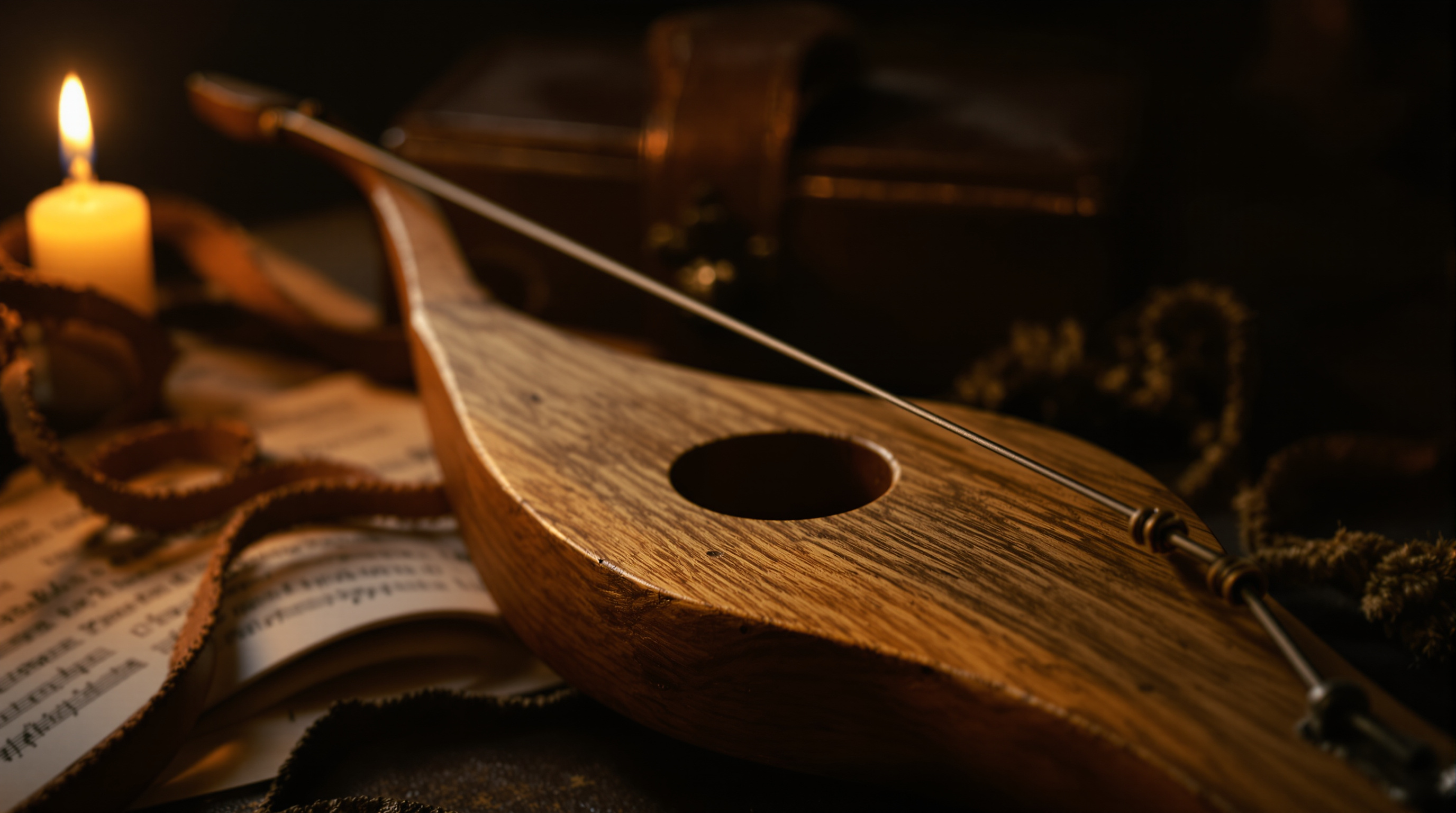
In the early 1960s, Buffy Sainte-Marie re-introduced the mouthbow to the world. "Making music on a weapon," as she often described it, became one of the most powerful images of what her music, her vision, and her life were about. It remains one of her most distinctive signatures — a sound no other popular artist has made so central to their work.
The Instrument Itself
A mouthbow is, at its simplest, a hunting bow strung as a musical instrument. It has one string, like a regular hunting bow, with a tuning peg to tighten the string to the desired pitch. One end of the bow is held against the mouth, which acts as a resonating chamber to amplify the sound. The player alters the shape of the mouth cavity and bends the bow itself to change the notes and access the instrument’s rich harmonic overtones. When played well, its tones and haunting harmonics are unlike anything else in Western music.
From The Buffy Sainte-Marie Songbook:
"A mouthbow is probably the oldest musical instrument in the world. It is basically a hunting bow and I guess somebody one day figured out that you can make music on a weapon. Maybe someday there will be virtuoso concertos to be played on M-1s and tanks. Mouthbows have been found all over the world among people who use handmade hunting bows and have the time to find something worth singing about. I've seen mouthbows from South America that were as tall as a man. Some mouthbows have a gourd attached to simplify the sound, and others have rattles tied on and they sound good when you shake them. Mouthbows have been seen in Africa, New Guinea, Borneo, Finland, Canada, and Greenwich Village."
How Buffy Found the Mouthbow
Buffy first encountered the mouthbow through fellow singer-songwriter Patrick Sky, a friend and musical collaborator in the early 1960s folk scene. Sky provided musical accompaniment on her early albums and wrote the title track for her second album, Many A Mile. He made Buffy’s first mouthbow — the one she played on her debut album, It's My Way! (1964). Since then, Buffy has learned to make her own mouthbows, both for herself and as gifts for other musicians.
The instrument suited her perfectly. Its ancient roots in Indigenous cultures around the world resonated with the Cree heritage she has long described as her own, and with her sense of musical identity. Its strange, otherworldly sound — at once intimate and vast — matched the emotional range of her songwriting. And the image of "making music on a weapon" captured something essential about her approach to art as a form of resistance and transformation.
The Sound
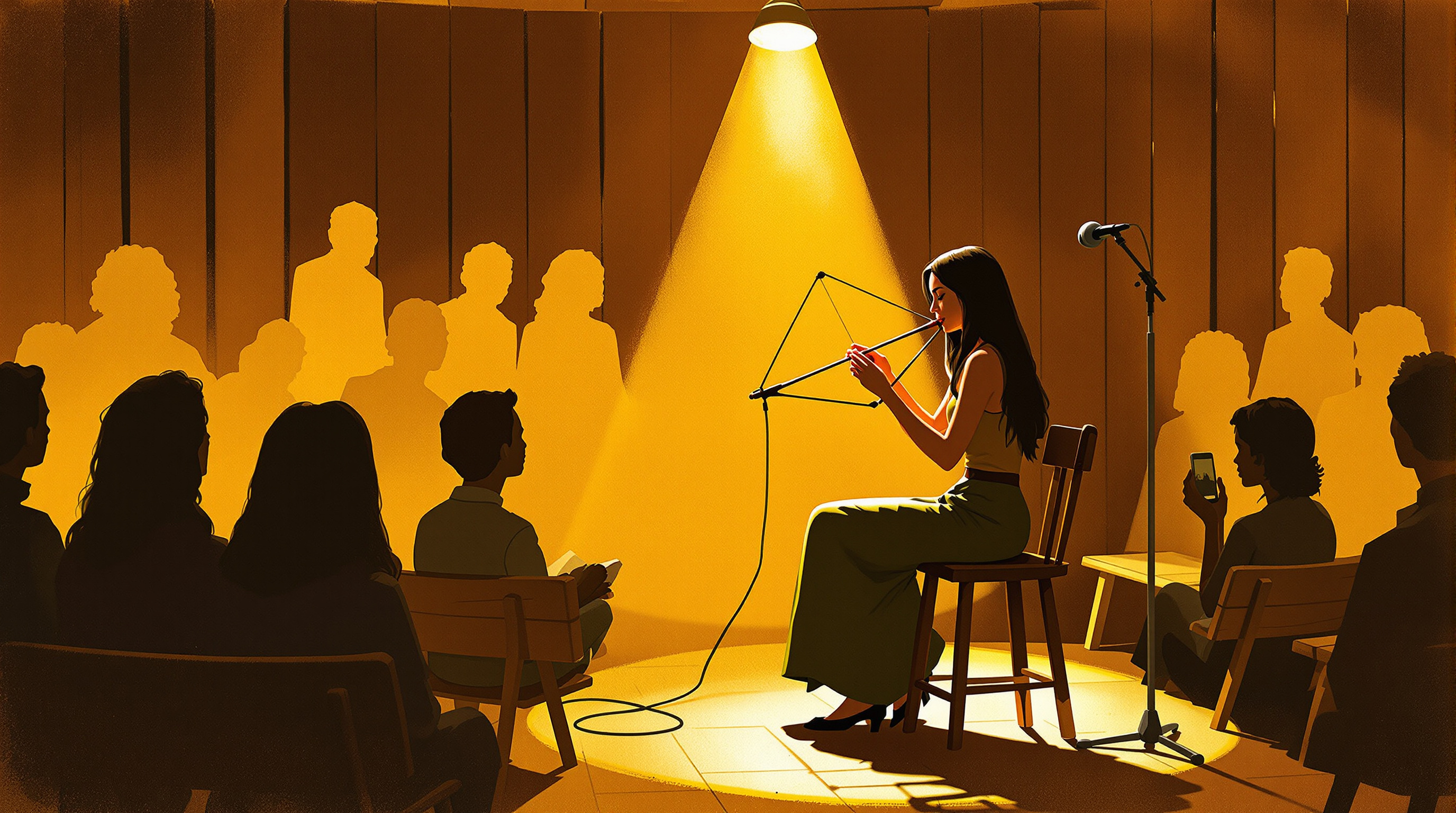
The mouthbow produces tones that are difficult to describe to someone who hasn't heard them. The fundamental pitch is relatively quiet; what carries is the harmonic series above it — ghost tones, overtones, and eerie whistling resonances that the player can sculpt by reshaping the mouth. The result is something between a Jew's harp, a jaw harp, and a bowed string instrument, but more fragile and more intimate than any of them. It sounds like it comes from somewhere very old.
On recordings like "Cripple Creek" and "Ground Hog," the mouthbow sits in the mix alongside guitar and voice but creates its own space — a texture that is entirely Buffy’s. The Library of Congress American Folklife Center has documented the mouthbow as one of the instruments that links Indigenous North American music traditions to the broader global history of bowed and plucked instruments.
Mouthbow Songs: Albums and Recordings
Buffy has recorded mouthbow across multiple albums spanning her entire career:
- Cripple Creek — It's My Way! (1964); Best of Buffy Sainte-Marie (1970); Up Where We Belong (1996)
- Ground Hog — Many a Mile (1965); Best of Buffy Sainte-Marie (1970)
- Come All Ye Fair and Tender Girls — Many a Mile (1965)
- Waly, Waly — Little Wheel Spin and Spin (1966)
- Sir Patrick Spens — Little Wheel Spin and Spin (1966)
- Lyke Wake Dirge — Fire & Fleet & Candlelight (1967); Best of — Vol. 2 (1971)
- Doggett's Gap — Fire & Fleet & Candlelight (1967)
- Reynardine — A Vampire Legend — Fire & Fleet & Candlelight (1967); Best of — Vol. 2 (1971)
- Uncle Joe — I'm Gonna Be a Country Girl Again (1968); Best of — Vol. 2 (1971)
- They Gotta Quit Kickin' My Dawg Around — I'm Gonna Be a Country Girl Again (1968)
- Dyed, Dead, Red — Performance soundtrack (1970)
- Hashisin — Performance soundtrack (1970)
The Mouthbow as Symbol
For Buffy Sainte-Marie, the mouthbow has always been more than an instrument. It is a bridge — between ancient and contemporary, between Indigenous and mainstream, between weapon and song. When she plays it, she is reaching back to a musical tradition that predates written history and bringing it into rooms, onto stages, and onto recordings where it has rarely been heard. That act of preservation and transformation is entirely consistent with everything else she has done: as an educator, as a digital artist, as an activist. She makes old things new without diminishing either.